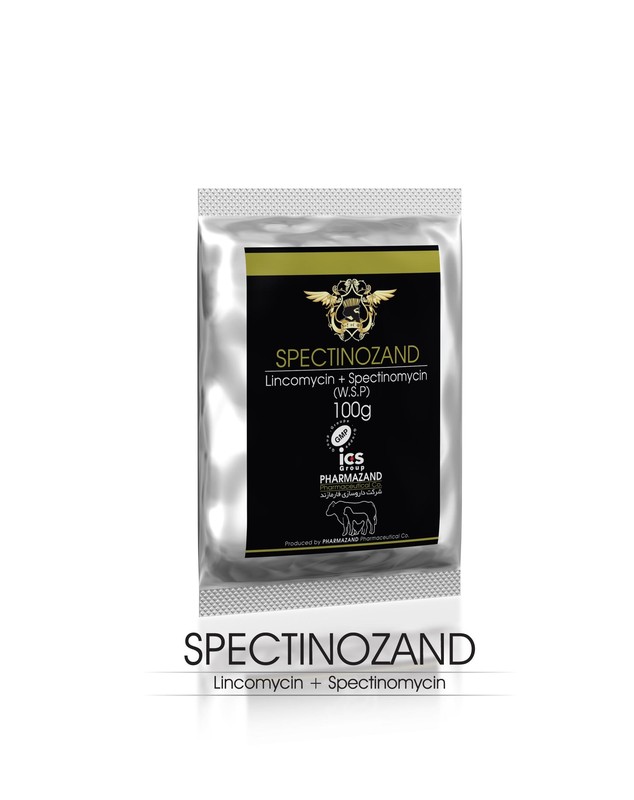
 Antibiotic powder
SPECTINOZAND®
Lincomycin 22.2% + Spectinomycin 44.4% Water-Soluble Powder
Composition
| Ingredient | Amount | Unit |
|---|---|---|
| Each gram of SPECTINOZAND® contains mg. | ||
| lincomycin hydrochloride | 222 | mg |
| spectinomycin sulfate | 444 | mg |
Mechanism of action
Lincomycin is an antibiotic from the lincosamide class. Lincosamides bind to the 50S subunit of the bacterial ribosome and suppress protein synthesis by inhibiting peptidyl transferases. Most aerobic Gram-positive cocci, including staphylococci and streptococci, are sensitive to lincomycin. Mycoplasmas are also generally sensitive to lincomycin.
Spectinomycin is a primarily bacteriostatic antibiotic from the aminocyclitol group of antibiotics that, by binding to the 30S ribosomal subunit, disrupts the transfer of peptidyl-tRNA from the A site to the P site and slows or stops protein synthesis in sensitive bacteria. Spectinomycin is structurally related to aminoglycosides but is not exactly a classic aminoglycoside in terms of mechanism and clinical characteristics.
Spectinomycin is active against a wide range of Gram-positive and Gram-negative bacteria sensitive to spectinomycin, including Escherichia coli, Klebsiella spp., Proteus spp., Enterobacter spp., Salmonella spp., Streptococcus spp., Staphylococcus spp., and Mycoplasma spp. This drug has little activity against anaerobes, most strains of Pseudomonas spp., and Chlamydia spp.
Target species
Poultry
Indications
SPECTINOZAND® is effective against many Gram-positive, Gram-negative bacteria and poultry mycoplasmas. SPECTINOZAND® is indicated for the treatment of CRD and CRD complex infections caused by microorganisms sensitive to lincomycin and spectinomycin.
Packaging
150 g multilayer aluminium sachets
Storage Conditions
Store in a dry place below 25°C, protected from direct light, in the original packaging. Once opened, keep the sachet tightly closed.
Dosage and Administration
50 mg of SPECTINOZAND® per kg of body weight or
For the treatment of CRD and CRD complex: 150 g of SPECTINOZAND® in 200 liters of drinking water for 5 to 7 consecutive days
For the treatment of infectious synovitis: 150 g of SPECTINOZAND® in 400 liters of drinking water for 5 to 7 consecutive days
– As directed by a veterinarian.
For the treatment of CRD and CRD complex: 150 g of SPECTINOZAND® in 200 liters of drinking water for 5 to 7 consecutive days
For the treatment of infectious synovitis: 150 g of SPECTINOZAND® in 400 liters of drinking water for 5 to 7 consecutive days
– As directed by a veterinarian.
Withdrawal period
Meat and offal: 5 days
Contraindications
Avoid the use of SPECTINOZAND® in rabbits, hamsters, guinea pigs, horses, and ruminants due to the possibility of serious gastrointestinal side effects including death.
Do not use in laying hens producing eggs for human consumption.
Do not use in laying hens producing eggs for human consumption.
Precautions
Medicated drinking water should be used within 24 hours.
Keep out of reach of children.
Keep out of reach of children.
Drug interactions
Concomitant use of SPECTINOZAND® with macrolides and florfenicol is not recommended due to antagonism.
Lincomycin 22.2% + Spectinomycin 44.4% Water-Soluble Powder