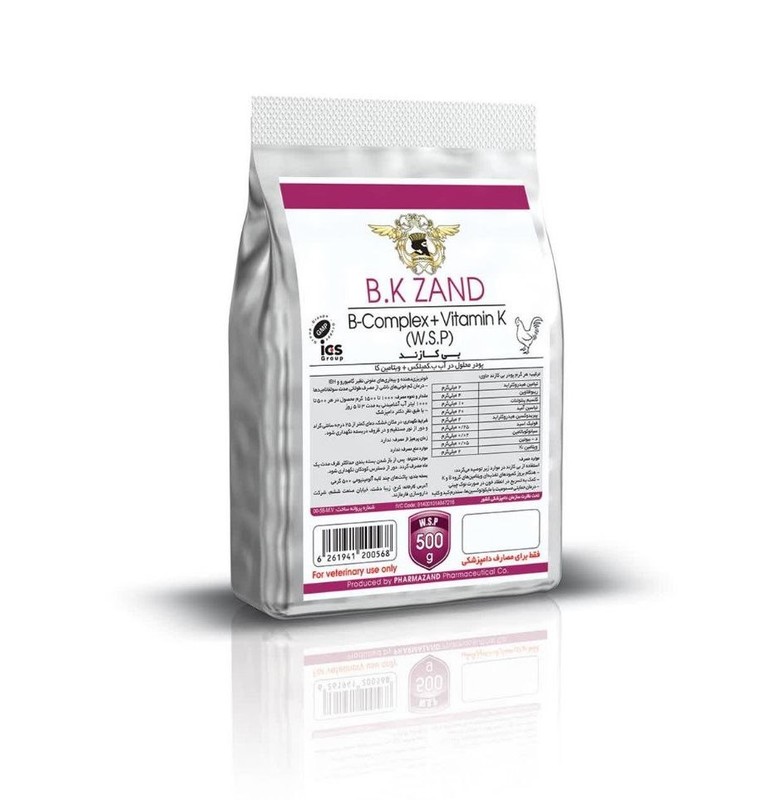
 Vitamin powder
B.K Zand®
B-complex + Vitamin K3 water-soluble powder
Composition
| Ingredient | Amount | Unit |
|---|---|---|
| Each gram of B.K Zand® contains: | ||
| Vitamin B1 (Thiamine hydrochloride) | 2 | mg |
| Vitamin B2 (Riboflavin-5-phosphate sodium) | 4 | mg |
| Vitamin B5 (Calcium pantothenate) | 10 | mg |
| Vitamin B3 (Niacinamide) | 20 | mg |
| Vitamin B6 (Pyridoxine hydrochloride) | 2 | mg |
| Vitamin B9 (Folic acid) | 250 | µg |
| Vitamin B12 (Cyanocobalamin) | 20 | µg |
| Vitamin B7 (D-Biotin) | 50 | µg |
| Vitamin K3 (Menadione sodium bisulfite) | 2 | mg |
Mechanism of action
B-group vitamins play a role as coenzymes or components of coenzymes in many metabolic reactions, including carbohydrate, fat, and protein metabolism, energy production, nucleic acid synthesis, and the maintenance of normal cellular function. Vitamin B1 (thiamine) is involved in carbohydrate oxidation reactions, vitamin B2 (riboflavin) and vitamin B3 (niacinamide) in oxidation and electron transport reactions, and vitamin B5 (calcium pantothenate) as a component of coenzyme A participates in fatty acid and carbohydrate metabolism. Vitamin B6 (pyridoxine) is involved in amino acid metabolism, biotin in carboxylation reactions, folic acid in one-carbon transfer and DNA synthesis, and vitamin B12 (cyanocobalamin) in one-carbon unit and amino acid metabolism.
Vitamin K3 (menadione), by providing vitamin K3 activity, acts as a cofactor in γ-glutamyl carboxylation and the activation of vitamin K3-dependent proteins, especially clotting factors, and supports the normal function of the blood coagulation system.
Vitamin K3 (menadione), by providing vitamin K3 activity, acts as a cofactor in γ-glutamyl carboxylation and the activation of vitamin K3-dependent proteins, especially clotting factors, and supports the normal function of the blood coagulation system.
Target species
Poultry
Indications
The use of B.K Zand® is recommended in the following cases:
• Prevention and assistance in compensating for deficiencies of B-group vitamins and vitamin K3.
• Helping reduce bleeding and maintaining normal blood coagulation during and after debeaking.
• Assisting in controlling and compensating for complications resulting from vitamin K3 deficiency and conditions associated with bleeding, including hemorrhagic enteritis caused by coccidiosis and certain gastrointestinal parasitic infestations.
• Supportive therapy in diseases associated with bleeding or increased requirement for vitamin K3, including Gumboro (infectious bursal disease).
• Supportive therapy during periods of mycotoxin poisoning and disorders related to liver and kidney function.
• Assisting in compensating for hematological complications and vitamin K3 deficiency following long-term use of sulfonamides and certain antibacterial drugs.
• Helping meet poultry vitamin requirements during periods of disease, convalescence, stress, and increased metabolic demand.
• Assisting in maintaining growth, general health, and productive performance of poultry under conditions associated with deficiency or increased demand for B-group vitamins and vitamin K3.
Packaging
500 g multilayer aluminium sachets
Storage Conditions
Store in a dry place below 25°C, protected from direct light, in the original packaging. Once opened, keep the sachet tightly closed.
Dosage and Administration
1000 to 1500 g of B.K Zand® per 500 to 1000 liters of drinking water for 3 to 5 consecutive days.
-As directed by veterinarian.
-As directed by veterinarian.
Withdrawal period
Meat and offal: 0 days
Eggs: 0 days
Eggs: 0 days
Contraindications
No adverse effects have been reported at the recommended dosage.
Precautions
Avoid prolonged administration of B.K Zand® or concomitant use with other products containing similar ingredients, except under the direction of a veterinarian.
Medicated drinking water should be used within 24 hours.
Keep out of reach of children.
Medicated drinking water should be used within 24 hours.
Keep out of reach of children.
Drug interactions
No known drug interactions have been reported at the recommended dosage.
B-complex + Vitamin K3 water-soluble powder