 Therapeutic support
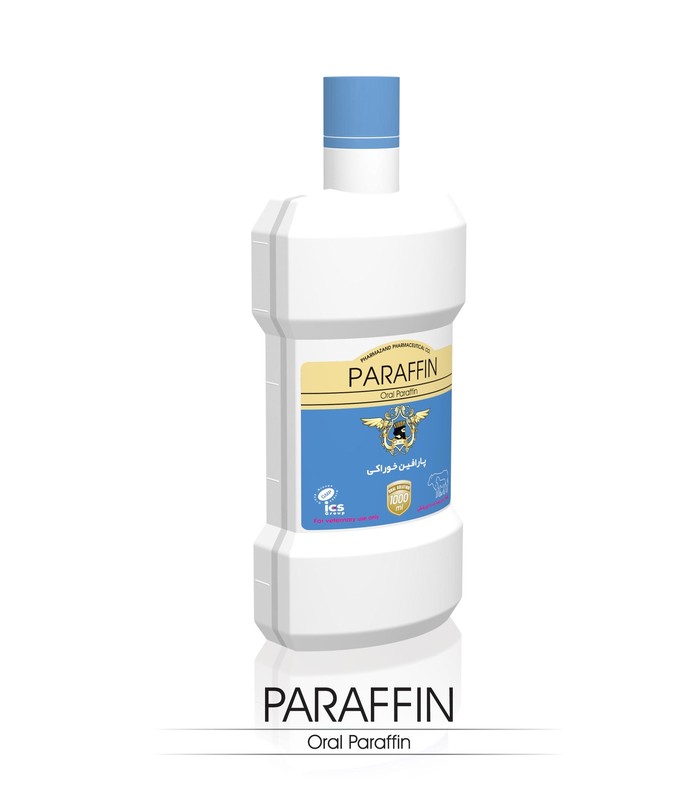
Paraffin
Oral Paraffin
Composition
| Ingredient | Amount | Unit |
|---|---|---|
| It contains 100% pure medicinal-grade liquid paraffin conforming to USP/BP pharmacopeial standards. |
Mechanism of action
Liquid paraffin is an inert aliphatic hydrocarbon that acts as a mechanical lubricant and stool softener in the gastrointestinal tract. By coating the intestinal mucosal lining and the surface of fecal masses, it retards excessive colonic resorption of water, thereby softening, lubricating, and promoting the effortless evacuation of alimentary contents. Furthermore, in ruminants suffering from frothy bloat, it reduces the surface tension of ruminal fluid, prompting stable gas bubbles to coalesce and dissipate, thereby facilitating eructation. Gastrointestinal absorption across intact mucous membranes is negligible.
Target species
Cattle, horses, sheep, goats, calves, foals, lambs, goats, dogs, and cats
Indications
• Laxative and lubricant: Management of constipation, fecal impactions, and hardened feces.
• Ruminant digestive disorders: Adjunctive therapy in ruminal impaction and frothy bloat.
• Equine disorders: Supportive management in impaction colic and non-corrosive toxicities.
• Neonatal care: Facilitation of meconium evacuation in foals, lambs, and kids.
• Feline care: Prophylaxis and treatment of hairballs (trichobezoars).
Packaging
1 liter polyethylene bottles
Storage Conditions
Store below 25°C, protected from direct light, in the original packaging. After opening, keep the container cap tightly closed.
Dosage and Administration
Administered orally, preferably via a stomach tube, or rectally as an enema:
• Horses and cattle: 1 to 4 liters orally.
• Calves and foals: 60 to 120 ml orally; or 50 to 60 ml rectally as an enema for meconium retention.
• Sheep and goats: 100 to 500 ml orally.
• Lambs and kids: 5 to 10 ml rectally as an enema for meconium retention.
• Dogs: 2 to 60 ml orally (adjusted according to body weight).
• Cats: 2 to 25 ml orally.
At the discretion of the veterinarian, the prescribed dose may be divided into 2 to 3 administrations throughout the day.
Withdrawal period
Meat and offal: 0 days
Milk: 0 days
Milk: 0 days
Contraindications
• Do not administer in cases of complete mechanical intestinal obstruction, bowel perforation, or gastrointestinal volvulus / torsion.
• Contraindicated in animals with swallowing disorders (dysphagia), severe depression, recumbency, or coma.
• Contraindicated in animals with swallowing disorders (dysphagia), severe depression, recumbency, or coma.
Precautions
Due to its tastelessness and low viscosity, liquid paraffin poses a severe hazard of accidental aspiration into the respiratory tract. Aspiration leads to irreversible, severe foreign-body lipid pneumonia (exogenous lipoid pneumonia). Therefore, oral drenching should be conducted with utmost caution, preferably by or under the supervision of a veterinarian via a nasogastric / stomach tube.
Never forcefully administer by drenching bottle in distressed animals or those lacking an intact swallowing reflex.
Avoid chronic and excessive usage beyond the recommended therapeutic timeframe.
The preparation is completely clear, colorless, and odorless. Do not use if any turbidity, discoloration, or precipitation is observed.
Keep out of reach of children.
Drug interactions
• Concomitant administration with anionic surfactants such as docusate sodium is strictly contraindicated. Surfactants promote emulsification and systemic absorption of paraffin, which can result in lipogranulomatous lesions in mesenteric lymph nodes, liver, and spleen.
• Prolonged and concurrent oral administration interferes with the intestinal absorption of fat-soluble vitamins.
• Prolonged and concurrent oral administration interferes with the intestinal absorption of fat-soluble vitamins.
Oral Paraffin