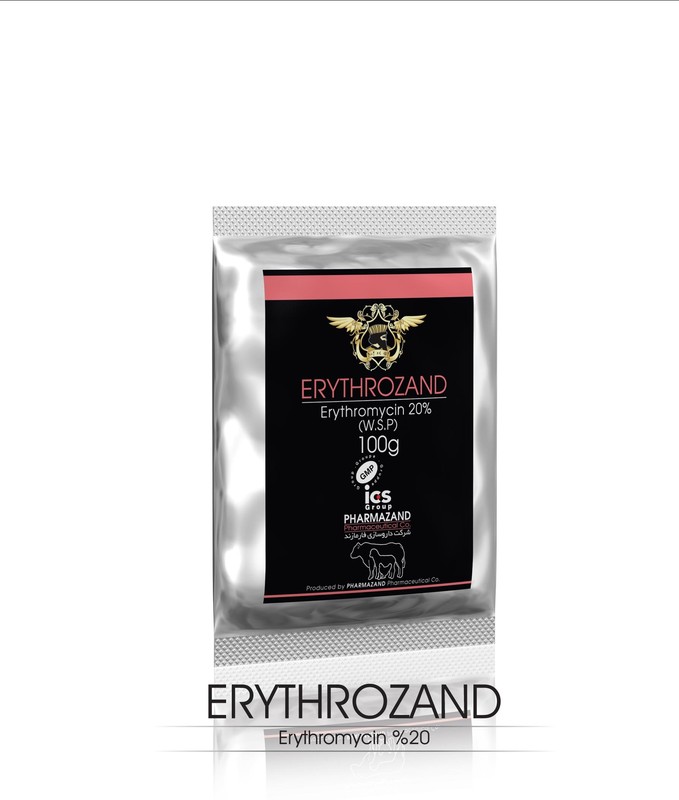
 Antibiotic powder
ERYTHROZAND®
Erythromycin 20% Water-Soluble Powder
Composition
| Ingredient | Amount | Unit |
|---|---|---|
| Each gram of ERYTHROZAND® contains : | ||
| erythromycin thiocyanate | 200 | mg |
Mechanism of action
Erythromycin is an antibiotic belonging to the macrolide class. It binds reversibly to the 50S subunit of the bacterial ribosome, thereby inhibiting bacterial protein synthesis and consequently inhibiting bacterial growth. Erythromycin is primarily bacteriostatic; however, at higher concentrations, it may exert bactericidal activity against certain highly susceptible microorganisms, such as streptococci.
Erythromycin is mainly active against Gram-positive bacteria including Staphylococcus spp., Streptococcus spp., and Clostridium spp., some Gram-negative bacteria such as Avibacterium paragallinarum, and certain erythromycin-susceptible strains of Mycoplasma spp. Most strains of the family Enterobacteriaceae are inherently resistant to erythromycin.
Erythromycin is mainly active against Gram-positive bacteria including Staphylococcus spp., Streptococcus spp., and Clostridium spp., some Gram-negative bacteria such as Avibacterium paragallinarum, and certain erythromycin-susceptible strains of Mycoplasma spp. Most strains of the family Enterobacteriaceae are inherently resistant to erythromycin.
Target species
Poultry
Indications
ERYTHROZAND® is indicated for the treatment of infections caused by microorganisms susceptible to erythromycin in poultry, including chronic respiratory disease (CRD) caused by erythromycin-susceptible Mycoplasma gallisepticum, infectious coryza, pasteurellosis, and staphylococcal infections such as infectious arthritis.
Packaging
500 g multilayer aluminium sachets
Storage Conditions
Store in a dry place below 25°C, protected from direct light, in the original packaging. Once opened, keep the sachet tightly closed.
Dosage and Administration
27 mg of erythromycin per kg body weight, or 100 g of ERYTHROZAND® per 100 litres of drinking water, for 3 to 5 consecutive days
- As directed by a veterinarian.
- As directed by a veterinarian.
Withdrawal period
Meat and offal: 3 days
Contraindications
Do not use in laying hens producing eggs for human consumption.
Precautions
Medicated drinking water should be used within 24 hours.
Keep out of reach of children.
Keep out of reach of children.
Drug interactions
Concomitant use of ERYTHROZAND® with florfenicol, tetracyclines, lincosamides, and other macrolides is not recommended due to antagonistic effects and reduced antimicrobial efficacy.
Erythromycin 20% Water-Soluble Powder